
27 Things I Wish I Knew Before Moving to Paris
When I first visited this city when I was 18 years old, I had an uncanny, guttural feeling that I would end up living in Paris from the minute the airplane’s wheels hit the pavement – but if I could go back in time, there are things to know before moving to Paris that I wish I had told myself before packing my bags and heading across the pond.
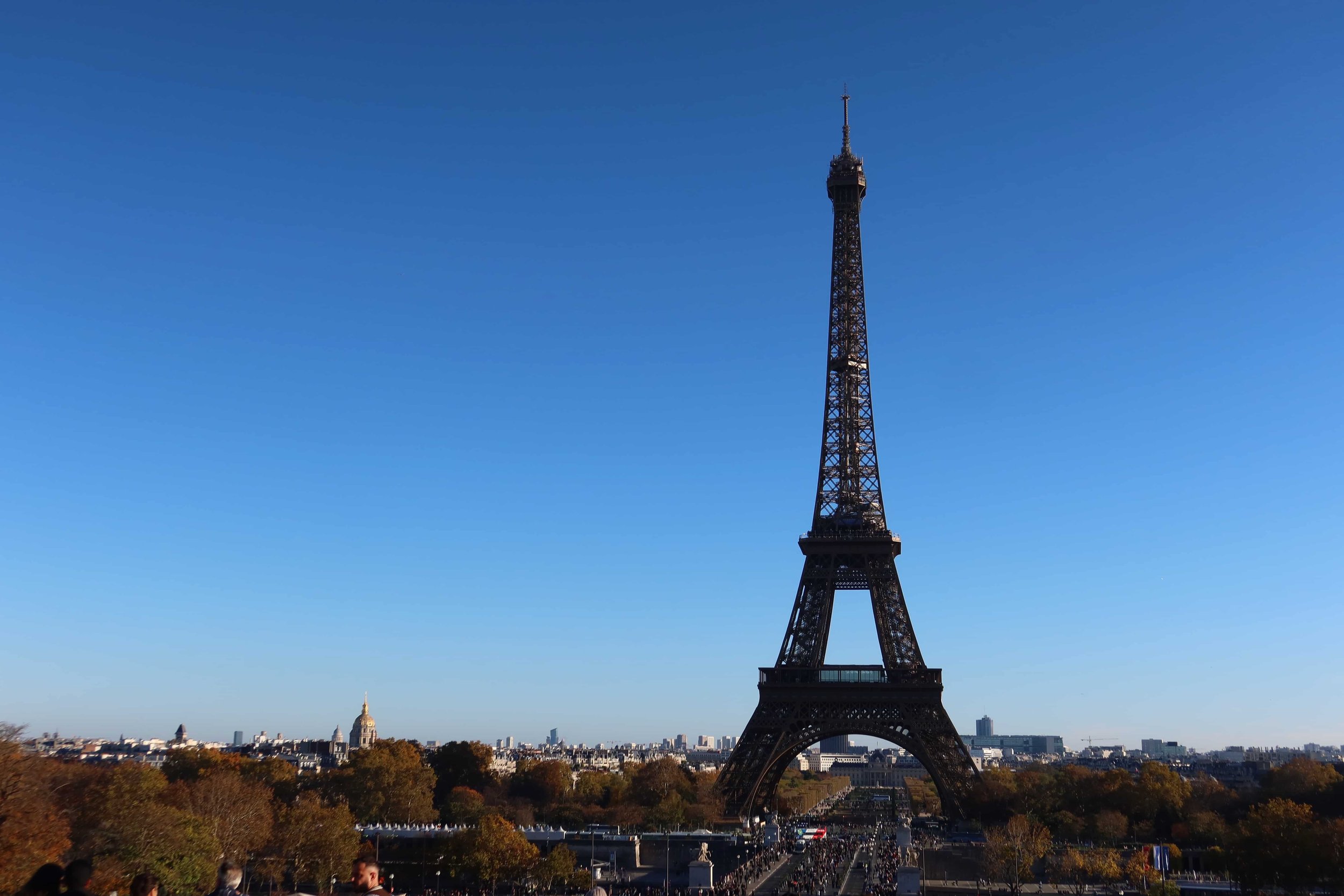
View of the Eiffel Tower from Trocadéro in Paris, France; November 2026
I moved to Paris from the U.S. in September 2021, meaning I’ve recently celebrated five whole years living in the city, and also recently applied for my French Citizenship!
To help you avoid my same mistakes, I’m ready to share everything you need to know before moving to Paris.
When I moved here, I expected Paris to be a free-spirited city conducive to the life of an artist – with a lot of open-mindedness and socialist benefits. However, I’ve only found some of it to be true – having been met with some of the harsh realities of living in Paris such as struggling to get packages delivered to my door or needed to keep track of paper documents.
Don’t get me wrong: when you move to Paris, you’ll get exactly what you’re expecting. Walking home will feel like you’re starring in a movie with lit-up, cinematic monuments behind you. The smell of butter wafting from a bakery will always cheer you up.
However, there are definitely some frustrating aspects to everyday life in Paris that go completely unnoticed on social media – as living in Paris is entirely different than visiting for a few days as a tourist.
My curated list of 27 things to know before moving to Paris comes from over five years of first-hand experience living in the French capital – a lot of which was unfiltered as I moved here at the age of 23 completely alone and with no knowledge of French.
I’m going to share exactly what to know before moving to Paris, what expat life in Paris is really like, the honest challenges of living in Paris, and of course – the beautiful things about this city that somehow never get old.
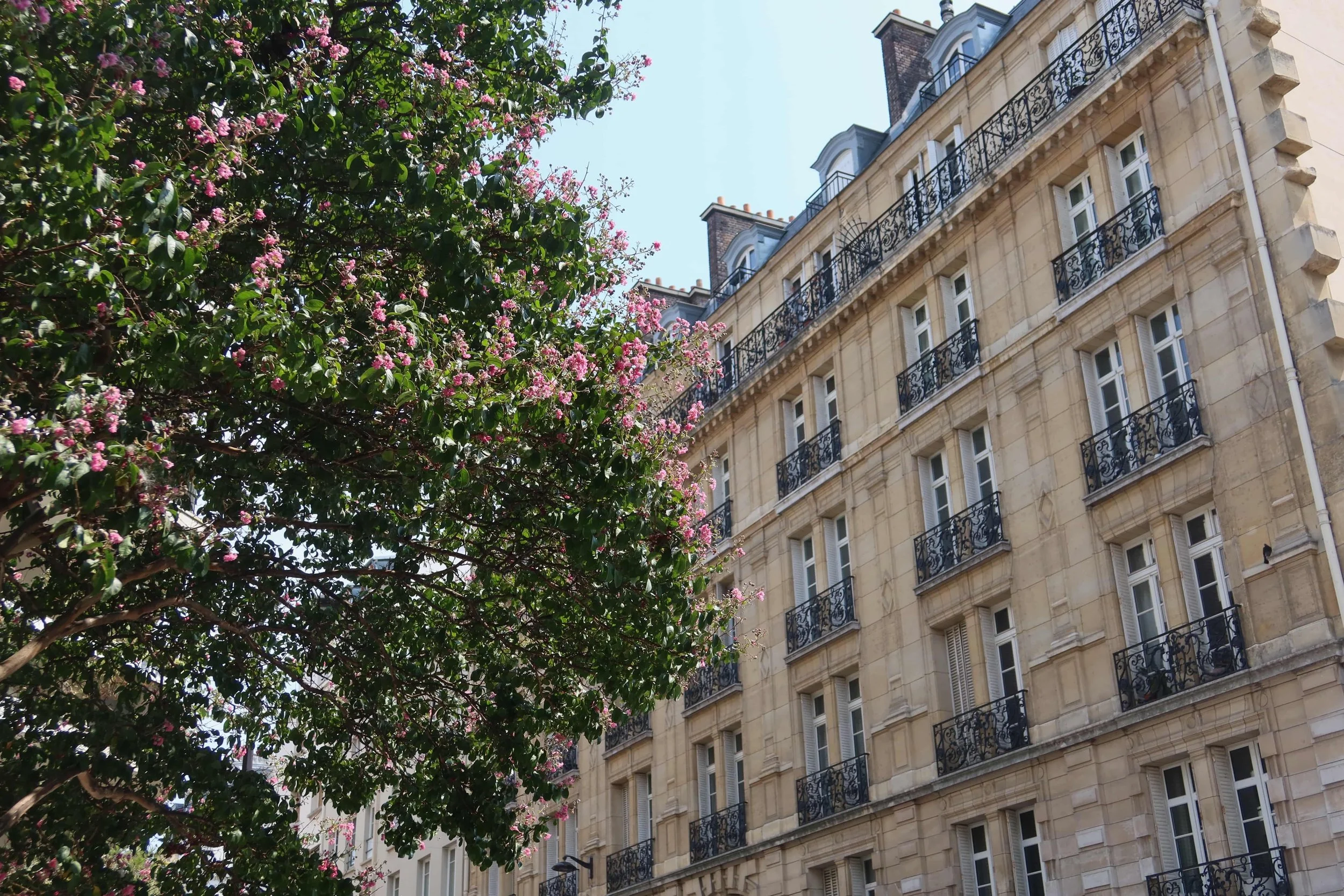
View of buildings in Paris, France; August 2026
Is Moving to Paris Worth It?
Yes, moving to Paris is absolutely worth it – as you’ll get to be surrounded by a unique culture, amazing restaurants and pastries, and incredible work-life balance.
Getting a coffee, dessert, and sandwich from a bakery can be as little as 11€. Whenever I go to the eye doctor or dermatologist, half of it is reimbursed within a couple of days. I have roughly 33 days of paid vacation every year (that I usually struggle to take entirely, I guess that’s the American still in me)!.
I’ve been able to live my dream from my late teens and early 20s and getting to live the cinematic-magic that comes with living in Paris.
However, as I mentioned – there’s a stark contrast between the polished version of Paris plastered on social media and the reality of living here.
Here are the 27 things I wish I had known before moving to Paris as an American:
27 Things to Know Before Moving to Paris
1. Family and Relationships Are a Bigger Priority Than You Might Expect
For some reason before moving here, I was under the notion that French culture would be more progressive – but in reality, I was hit hard by just how traditional Paris is and how prominent of a place French family and relationships have in people’s lives.
It’s common for expats living in Paris and locals alike to fly home to their country (or city in France) of origin for a few weeks at a time to spend summer or Christmas holidays. I always come back to work on Monday and hear about all the things, traditions, and activities people did with their families. Even in today’s modern age, I still get looks or comments from colleagues, neighbors, or French friends that wonder why I’m not itching to have children or start a family with a French man.
As an extremely independent person who was raised in the political and career-centric D.C. area, I have to be honest – Paris is not the best place for solo women. It’s a city much more conducive for couples and families alike.
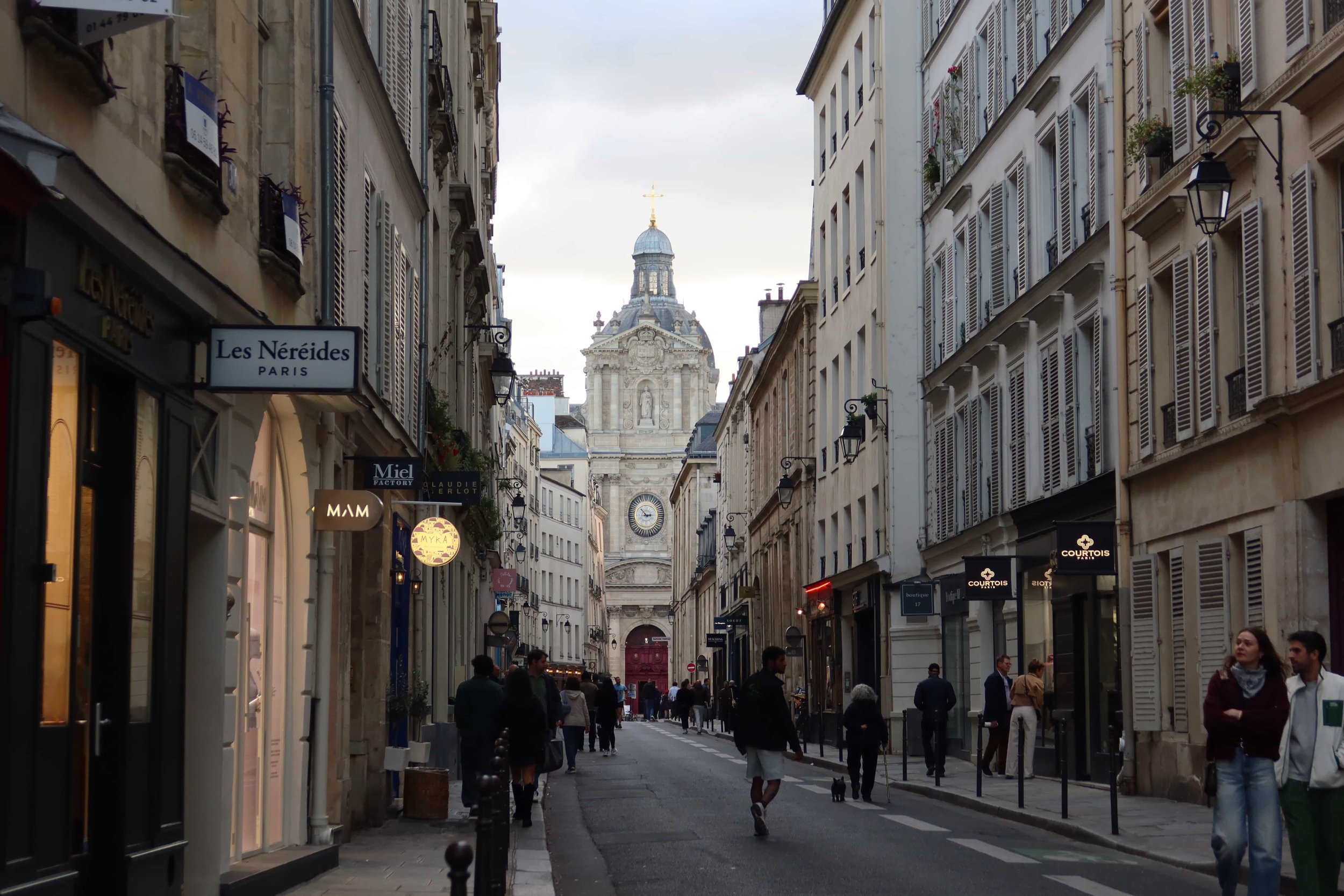
View of Le Marais in Paris, France; August 2026
When you’re sitting alone in a café, it’s palpable that you’re alone. In New York City, I never felt arbitrary eating alone in a restaurant – but in Paris, while I am used to it, it’s very clear that something is “wrong” with me when I’m dining for one.
In the U.S., I was very used to going about my life and not feeling like the odd-ball out for being alone – but in France, my independence is extremely conspicuous, and almost makes people here uncomfortable that I don’t conform.
If I had a dime for every time that French people in this city told me to find a French boyfriend… let’s just say, I’d probably own a pretty nice apartment by the Eiffel Tower by now.
2. Getting Packages Delivered in Paris Is a Nightmare
In the United States, we have bigger homes that usually come with a front porch where the Amazon delivery guys can happily leave my package and go about their day.
Unfortunately, the complete opposite is true in France. Even living in a quiet and safe neighborhood near the Iron Lady, delivery men will never leave my package in the hallway.
Instead, they call. If you don’t answer that call, they’ll leave. If they leave, they’ll try to deliver again the next day. And if you have your phone set to silence unknown callers like I do – it’ll be a never-ending circle, until thy eventually give up and leave it at a point relais (a pick up point, which is usually a local souvenir or book shop).
This can be avoided if you live in a building with a guardian, or a “doorman” – but most people living in Paris (such as myself) can’t afford that.
As a result, I try my best to buy things in person living in Paris – but it really is challenging when you’re already busy living your life.
Hear more about how challenging deliveries are in France in my video below:
3. Healthcare in France Isn't Actually Free
Everyone always raves about how great the “free” French healthcare system is, but let me tell you as someone who has dealt extensively with medical issues from blepharitis to acid reflux – is that healthcare in France for foreigners isn’t as free as you might think it be.
While it’s true that an ambulance ride or last-minute surgery won’t cost you thousands the way that it does in the U.S., healthcare in France isn't 100% covered the way most people seem to think.
In France, you have what’s called a carte vitale – which stores your medical appointments and helps you to be reimbursed by social security (which no, is not your retirement fund – but refers to the public service that pays for a portion of your medical costs).
Then, if you have a job, you’ll get what’s called a mutuelle – which will often cover the additional costs. However, the truth is – you’ll usually only be 100% refunded or never need to pay out-of-pocket if the doctor is a convention 1 doctor, which means they only charge base costs.
Even though I speak B2 level French, I still prefer to have doctors that speak in English. As a result, this often requires going to more expensive practices that charge more than your carte vitale or mutuelle together will cover.
To put it into perspective, I’ve spent 1,540€ out-of-pocket for healthcare in 2026 alone.
4. French Bureaucracy Is More Complicated Than You Can Imagine
Everyone loves to joke about how slow French bureaucracy can be, but you won’t know the brunt of it until you live here.
French administration is notorious for moving at the pace of a snail (perhaps as a way to further promote escargot, but let me tell you – moving to France paperwork is no joke. You’ll be asked for all sorts of documentation like your old college transcript, diplomas, proof of funds, and more.
In fact, when I went to renew my titre de séjour in 2023 – I ended up needing to print 64 pages of paper to provide documentation for things like my job contract, rental agreement, and electricity bills.
Plus, the administrative delays are real. In Paris, it takes over a year to get to the interview stage after submitting your French citizenship dossier. Things also shut down entirely during August and during the holidays, which only further aggravates the backlog.
If you need anything, like an appointment or an extension on your residence card, getting in touch with the préfecture is usually next to impossible. It requires constant emailing and calling until you get a hold of the right person.
As someone who grew up with the efficiency of Washington D.C. as my backdrop, this is one of those things in Paris that I’ll probably never fully be used to.

View of Bastille in Paris, France; October 2026
5. Your Titre de Séjour Comes With Legal Restrictions
Unless you move to France for marriage and acquire a vie privée et familiale residence card, you’ll have to get used to your life feeling very constricted when living in France.
There are several different types of French residence permits: which all come with various restrictions. For instance, when I moved here on a French student visa, I could only work 20 hours a week. The past few years, I’ve been on a titre de séjour salarié – which means that I can only work for my employer while on French soil.
The table below will provide an overview of the different types of residence permits you can have while living in France:
🇫🇷 📄 Types of French Residence Permits ✨
| 📄 Residence Permit | 👤 Who It's For | 💼 Working Rights | ⚠️ Limitations |
|---|---|---|---|
| 🎓 Student Residence Permit Titre de séjour étudiant |
International students enrolled in a qualifying
university, school, or higher education program
in France.
✨ My Personal Experience
I originally moved to France on a student visa!
If you're considering taking the same route,
I've put together a step-by-step guide on
how I got my French student visa
based on my own experience as an American
moving to France.
|
You can generally work up to 964 hours per year as an employee, equivalent to approximately 60% of the standard annual working time in France. | You cannot ordinarily work full-time year-round or register as an auto-entrepreneur. Certain work-study arrangements allow additional hours under specific conditions. Your studies must remain the primary reason for your stay. |
| 🏡 10-Year Residence Card Carte de résident | Foreign nationals who qualify for long-term residence in France through eligible residency, family circumstances, or other qualifying routes. | You can generally work full-time, part-time, change employers, freelance, or start your own business without employer sponsorship. | There are generally no immigration-related restrictions on the type of work you can do. However, obtaining the card requires meeting specific eligibility conditions, and certain regulated professions have their own requirements. |
| 💼 Employee Residence Permit Titre de séjour salarié |
Foreign nationals employed in France under
a permanent employment contract (CDI).
Fixed-term contracts (CDD) generally fall under
the travailleur temporaire category.
✨ My Personal Experience
I've spent most of my years living in France
on a salarié residence permit. After initially
moving here on a student visa, I transitioned
to this status to work full-time in France.
As an American working in Paris, I'm very
familiar with the administrative challenges
and working restrictions that come with
this type of residence permit.
|
You can work as an employee in accordance with your approved work authorization (autorisation de travail). | Your employer generally needs to obtain a work authorization for you. Changing employers or signing a new employment contract generally requires a new work authorization. This permit does not independently authorize freelance or auto-entrepreneur activity. |
| ❤️ Private and Family Life Residence Permit Titre de séjour vie privée et familiale | Foreign nationals with qualifying personal or family ties in France, such as spouses of French citizens, parents of French children, or people eligible through family reunification. | Generally allows full-time employment, part-time employment, freelancing, and self-employment without needing an employer to sponsor you. | Working rights are generally very flexible, although exceptions exist for certain family-based permits. Renewal depends on the eligibility conditions associated with your particular residence permit. |
| 🧸 Au Pair Residence Permit Titre de séjour jeune au pair | Young foreign nationals between the ages of 18 and 30 who want to live with a French host family while learning about the language and culture. | You can carry out childcare and light household duties for your host family for up to 25 hours per week in exchange for accommodation, meals, and pocket money. | You cannot take on additional employment outside your au pair arrangement. Your stay under this status is limited to a maximum of two years. |
| 💻 Entrepreneur Residence Permit Titre de séjour entrepreneur / profession libérale | Freelancers, independent professionals, entrepreneurs, and people looking to run their own business in France, including eligible auto-entrepreneurs. | You can legally carry out your approved independent professional activity, invoice clients, and earn income through your business. | You must demonstrate that your business is economically viable and can provide sufficient income to support you. This permit does not automatically authorize you to take a salaried job in France. |
| ✈️ Long-Stay Visitor Visa Visa long séjour visiteur / titre de séjour visiteur | Retirees, financially independent individuals, and people who want to live in France without pursuing professional activities here. | No professional activity is authorized under visitor status in France. | You must demonstrate sufficient financial resources to support yourself and meet applicable health insurance requirements. France does not offer a dedicated digital nomad visa, and visitor status should not be treated as authorization to work remotely from France. |
This is one of those things that really doesn’t get talked about enough when it comes to immigrating to France. Under my current circumstances: I can’t freelance. I can’t start a business. I can’t do anything unless it’s tied to my salaried job.
At times, this can feel very restrictive and frustrating – as you’re essentially barred from creating other sources of income for yourself (which is especially challenging in these tough economic times, where unemployment in France is up to 8.2%).
6. Learning French Is Exceptionally Difficult
When I signed up to take Spanish freshman year of high school, I thought I was making my life easier – as my mom is a native speaker and most of my grandparents were from Cuba.
But if I could go back in time and speak to my fourteen-year-old self – I would tell her to start learning French as soon as possible, as it would’ve really helped me with my grammar (something I still struggle with, after all these years living here).
I moved to Paris with only the basics under my belt, and while I now speak enough to get by in my day to day life and have conversations – speaking French in France is far different than anything you could ever learn in a classroom.
There really is a true language barrier in Paris: as even when I speak, people will pretend to not understand me – and when French people speak, sometimes it’s too fast for me to fully comprehend.
That being said, if you do end up living here for years and take a few French courses like I did – it won’t be too hard to pass DELF B2 for citizenship. However, it is an additional effort – one that you’ll really need to stick to if you don’t live in a French household or communicate with your colleagues in French like me.
I’ve found the best way to try and learn French while living in Paris is to watch movies, try to speak as much as you can even when you make mistakes, and ask every time you don’t know how to say something.
If someone switches to English, just keep speaking French back to them until they get the point that you’re trying to learn. Trust me – it’ll eventually stick.
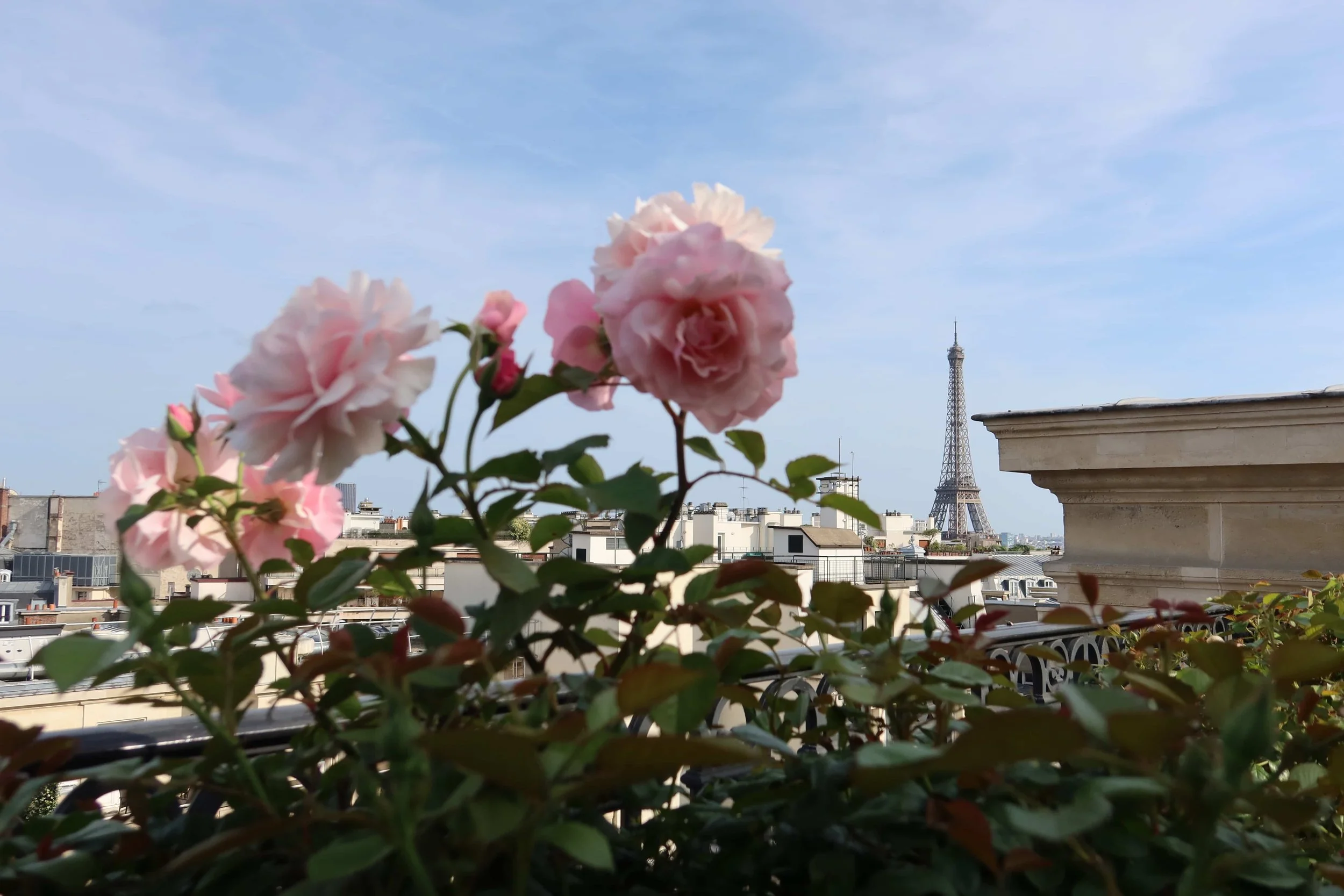
View of Eiffel Tower in Paris, France; May 2026
7. Making Genuine Friends in Paris Can Feel Nearly Impossible
To be honest, I’ve never been good at making friends my whole life – having been through several really tough break-ups before turning 30.
I was under the notion that when I moved to Paris, I was going to find it easy making friends in France – thinking I was going to find a lot of like-minded people. I thought I would find a lot of expats who were equally as adventurous and curious to learn more about the world around us.
Unfortunately, it’s been the exact opposite. I’ve found that the majority of women I’ve met here are very traditional – having moved to France for a partner and already have their set of friends, and aren’t interested in expanding their social circles. Even if I’ve clicked with someone (or at least, thought I did) – people don’t end up making the effort to maintain the friendship.
While this can be said for making friends anywhere as an adult, Paris is a little different. It’s not even the language barrier that’s the problem (as most women you’ll try to befriend will be expats, anyways). It’s that the majority of women in Paris make friends for the moment. They meet on apps, hangout for a season, and then go their separate ways when someone eventually moves back home – leaving the friendships lacking longevity. It’s also been challenging to meet people outside of work in an organic way, and colleagues also don’t always end up becoming your friends.
In my five years here, I’ve tried just about everything: starting a reading club, going to expat events, meeting girls from Facebook groups, and friendship apps. They’ve almost all gone awry. The past year or two, I’ve stepped back and stopped trying – and just focus on myself.
But it would be a lie to say that making friends in Paris is easy. If you’re looking for a deep, genuine, life-long connection – it’ll be next to impossible to find. Friendships in this city are extremely surface level and best for lighthearted social events.
8. Paris Can Be an Incredibly Lonely City
On the same topic of how hard it can be to make friends in Paris, living alone in Paris also brings about a lot of loneliness.
Now, I’ve always been an outcast my whole life. I was a misfit in my own family, bullied much of the time in school, and lost a lot of friends along the way into adulthood – but loneliness in Paris is on another level.
There’s an aura of being “excluded” from things – even if you’ve done everything right to try and fit in and love the city itself. If you don’t move to Paris for family or love, you’ll have to start from scratch – and even then, most of the friends I’ve made here have their own partners, kids, and lives.
It’s true that Paris is a big city, so when I go outside, I’m technically never “alone” – but as the city is garnered towards couples, groups of friends, and families, it can easily exaggerate already-existing loneliness.
9. Consumer Rights Can Feel Nonexistent in Practice
I’m the kind of person that whenever something goes wrong, I write a letter until I receive customer service or the refund I deserve. Perhaps it’s the writer in me or my American upbringing, but I still believe in “the customer is always right” and being treated well when I am buying something.
French customer service is the antithesis of how it is in the United States. Consumer rights in France don’t really exist, and getting refunds in France is an absolute nightmare.
I can’t tell you how many times I have called a service like DARTY to try and re-organize a disaster by shipping two freezers at once, even though I had canceled one of the orders. It took numerous phone calls, and even then – they still organized the deliveries in correctly – where I then had to call various postal carriers and demand delivery be rescheduled.
Another example is when I was going to an offsite for work. We bought our train tickets, and we walked through as there was no one guarding the gates – and they were wide open. There was no virtual way possible to validate our tickets. And still, the train worker on SNCF tried to fine us 200€ for not validating our tickets.
If I were in the U.S., I would have been calling customer service incessantly until they honored the refund. In France, even if you’re a native speaker, it’s next to pointless – and because of this attitude of being unwilling to provide good customer service, French people don’t even try.
My French boss managed to get the fee down to 100€, but this still boils my blood from time to time whenever I think about it – as there was zero reason to even owe a dime.
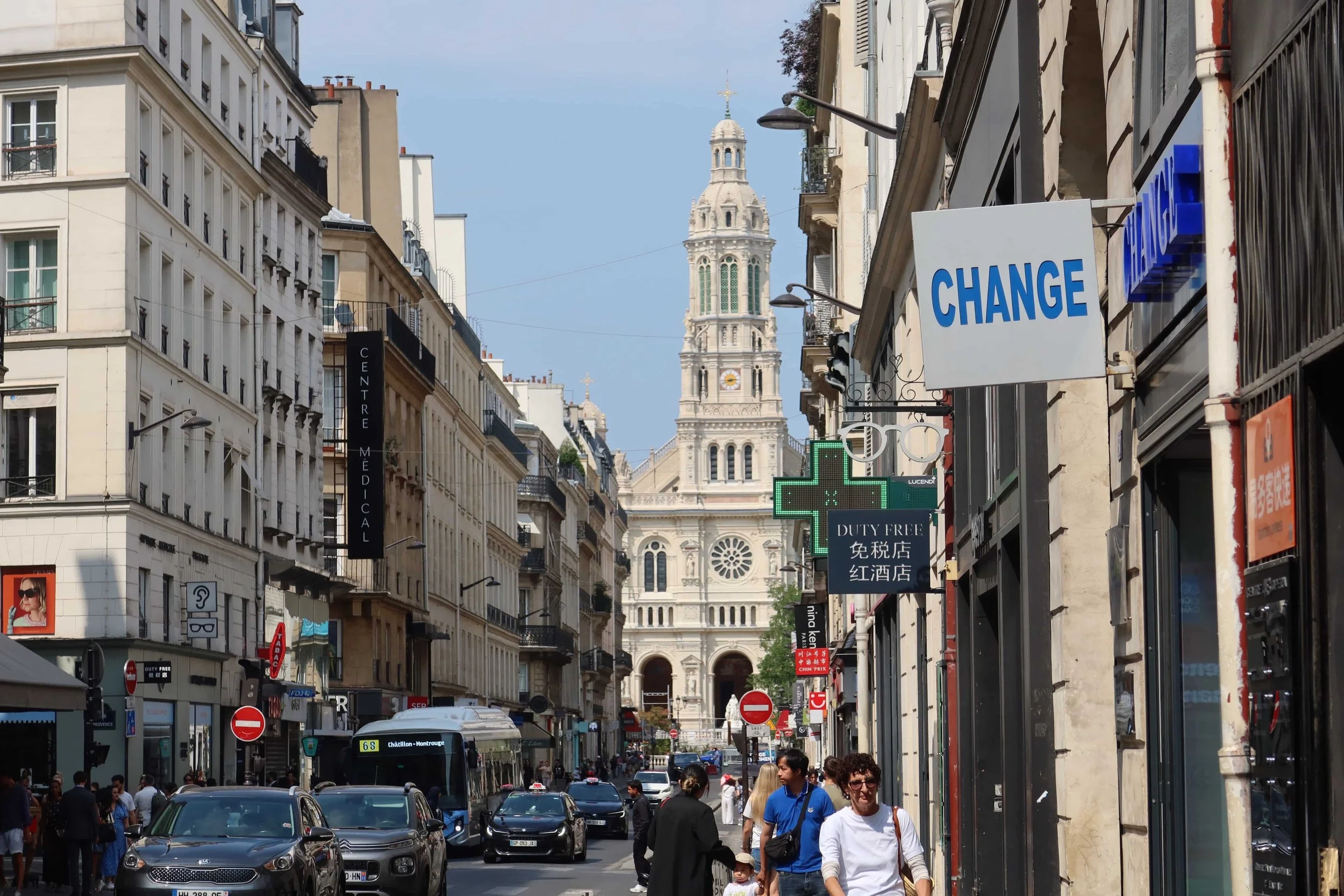
View of busy street in Paris, France; August 2026
10. Parisians Have Surprisingly Little Spatial Awareness
Maybe it’s the New Yorker in me, but walking in Paris truly drives me insane.
Daily life in Paris means taking the metro and walking in busy streets during rush hour. I’ve found when Parisians walk, there’s no sense of urgency – and they don’t feel people around them or behind them. This can make it exhausting to navigate crowded streets.
They also only care about personal space when it affects them. For instance, I was on a busy metro the other day on my way to work with no room to move. My backpack was accidentally bumping into women sitting down. They ridiculed me after getting off of the train, but when it’s vice versa (and as someone under five feet, trust me, it has been) – they don’t care.
Luckily, I’ve finally found the trick to mitigate this: you have to keep walking straight and look into nothing (do not make eye-contact with the person approaching you) – and they’ll move out of your way.
11. The Stereotype About Parisian Arrogance Has Some Truth to It
On this same note, I have to be honest – there is some truth to Parisian stereotypes about them being arrogant and rude.
I remember when my aunt, uncle, and cousin were visiting me in Paris back in 2024. For our first meal together, we went to a typical French brasserie. I warned my family to say merci, but when a “thank you” accidentally slipped from my aunt’s mouth – the waiter immediately cracked a sour face. The waiter only spoke to me and refused to have any verbal communication with my family in English, at all. I’ve seen this numerous times over the years whenever I’ve had family visit me.
Same thing when my mom first visited me in France in 2021. I urged her to say bonjour before anything else came out of her mouth at border control. When she didn’t, the first thing to happen was a grumpy bonojur from the man stamping her passport. On that same trip, my mom was sitting in a nail salon without me, and the person
When I came back from Istanbul, a similar thing happened to me. I accidentally forgot to greet the cleaning man, asked in French if it was clean, and he got very annoyed and quipped back, “bonjour, monsieur”.
This goes not just for Paris, but everywhere in France for everything you do – walking into a shop even if you’re not going to buy anything, validating a ticket on a train, and more. There’s a strong culture that if you don’t greet people in a formal manner, you’re being rude.
Some people may not view this as being rude, but for Americans who are used to more casual greetings and far less formalities – it can be a challenging French culture shock to overcome.
I’ve seen it whenever I travel, too. There is a tangible difference in how any waiter or staff member will treat me just because I’m speaking French instead of English.
Also, I was in New York City one year in Union Square – and some French people came up to me and asked where the nearest subway was… in French! I certainly wasn’t dressed like a French person, so why they thought a random person off the street in Manhattan would speak was beyond me.
I have so many more examples of these kinds of Parisian attitudes putting a damper on our day, but the city is so beautiful – it’s a give-and-take I bear with.
12. Smoking and Air Quality Are Real Everyday Issues
As someone who struggles with a few health problems, pollution in Paris is a true challenge from time to time.
There’s constant cigarette smoking and vaping in restaurants, on terraces, and in other public places – making it hard to escape from. As a contact lens wearer with inflamed eyelids, I have to take extra precautions due to the poor air quality in Paris.
Smoking in Paris is still extremely common, to the extent I’ve had colleagues genuinely wonder why I haven’t caved in yet.
Also, if you don’t smoke or haven’t grown up around it – it can be really uncomfortable when you get stuck sitting next to someone outside in a café.
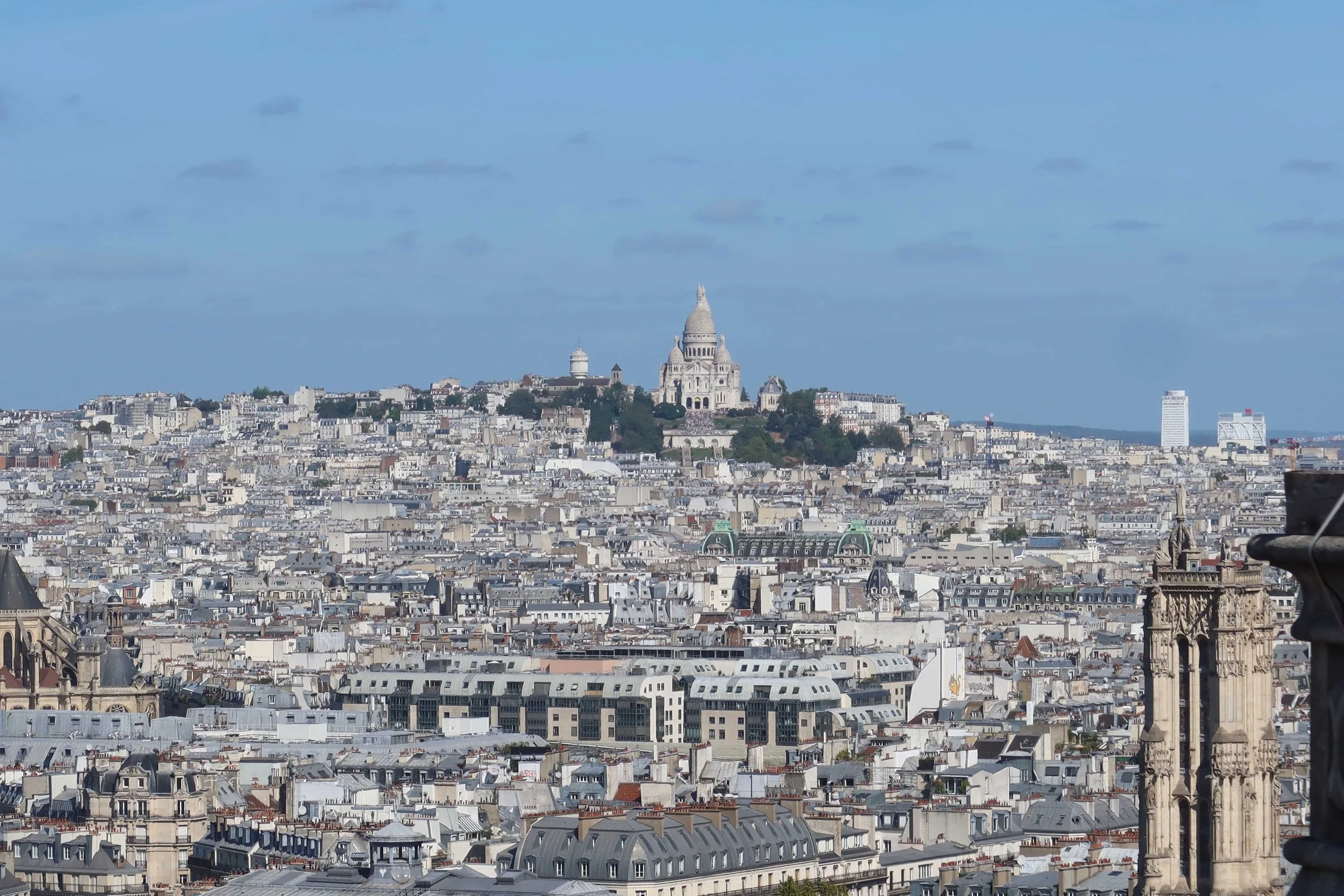
View of the Sacré-Cœur from Notre-Dame in Paris, France; September 2026
13. Paris Has Extremely Hard Water
I heard about the stories of hard water in Paris before I moved here, but I never knew how bad it truly was until I saw the effects of it building up long-term.
The problem with Paris tap water is that in contains high levels of calcium, or calcaire, meaning while it’s perfectly safe to drink – there’s a lot of limescale in Paris that easily builds up not only on dishes, but your hair and your skin.
My hair stopped growing as fast as it used to, and often feels like there’s leftover residue in it. As awful as it sounds, I’ve found that no anti-calcaire beads or shower filters work – and that rinsing my hair with bottled water is the only option.
Same goes for my skin: pimples or scrapes leave dark marks that last far longer than they used to. Also, it’s affected how I cook! Whenever I’m trying to cook dry beans, I’ve found that I need to put a little bit of baking soda into the water to neutralize the chemical balance and ensure the beans soften.
This is one of those things that isn’t the end of the world. However, when I buy an apartment here one day – I will absolutely be installing a water softener!
14. Mold and Dampness Can Be Problems in Parisian Apartments
If you’re moving to Paris, odds are that you’re going to be living in an old Parisian apartment – and in addition to plumbing, small spaces, or lack of washing machines, one of the biggest Paris apartment problems is mold.
I myself live in an apartment that’s very old with poor insulation. The walls are almost always wet, and my towels need to be hung over the heater to dry, and black mold easily accumulates even with the windows open. This is because the humidity in Paris is strong, as it’s very rare that you’ll walk outside after rain (especially in the winter) with the
Mold in Paris apartments is common. What most of us do to avoid constantly wet clothes and towels that don’t dry is by making sure the window is always open when cooking or showering to improve ventilation. I’ve also had some friends find success by purchasing a de-humidifier.
Personally, I try to wipe down the mold with bleach whenever I see it – and leave my windows open for a few minutes a day.
15. Paris Heatwaves Are Much Harder Than You Expect
Typically, Paris wouldn’t be a city where you would envision a scorching summer – but let me tell you, Paris heatwaves are amongst the worst I have ever experienced.
In the U.S., even if it was a hundred degrees outside – most of my activities took place inside with air conditioning. However, the thing about Paris summer heat is that it can be very humid.
Since heat rises to the top floor (which I live on) and old apartment buildings in Paris are poorly insulated, it’ll feel like you're cooking baking in the sun.
Plus, air conditioning in Paris is next to non-existent. A lot of places will say they have air conditioning, but it’s still not as strong as the central A/C units Americans will be used to from the states.
Last summer during the record breaking heatwaves in Paris, I really struggled to stay asleep at night or be efficient at work – to the extent that I needed to escape to a friend’s apartment with air conditioning.
Watch me during a Paris heatwave in my vlog below!
16. Paris Isn't Always the Romantic City You See in Movies
People are always romanticizing Paris for being this picture-perfect scene to set up a fairy-tale romance, but the reality of living in Paris is that it’s not what you see in movies.
Yes, it’s true that the city is exceptionally gorgeous – but underneath that, she’s a moody, grungy, and relatable city. Parks have rats. Traffic can be obnoxious. Garbage can overcrowd even the prettiest of streets.
Many people end up visiting Paris and leave disappointed that it’s not what they expect. This phenomenon is better known as Paris syndrome.
Paris truly is cinematic, but like any movie – she has her outtakes, too.
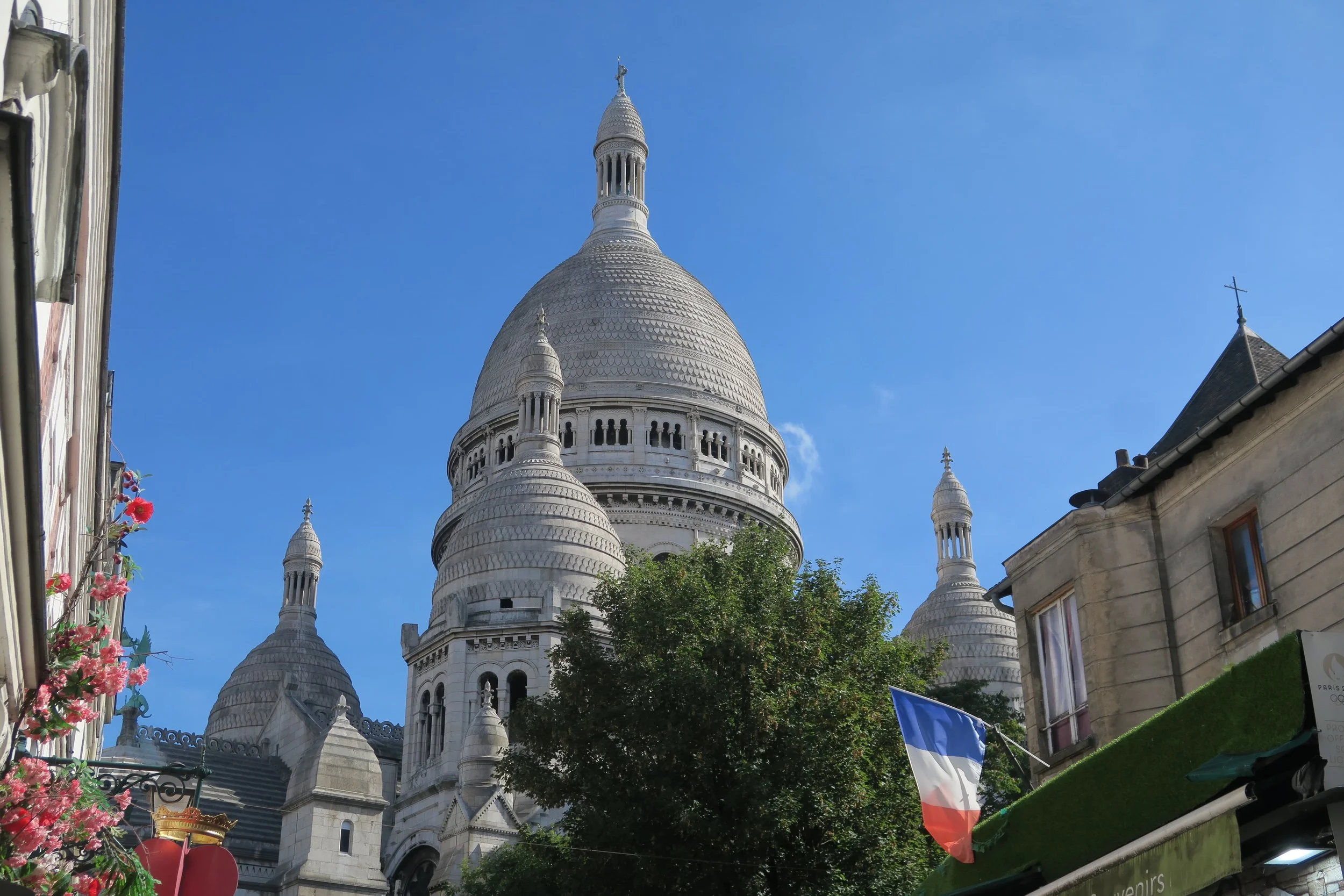
View of the Sacré-Cœur in Paris, France; September 2025
17. Visiting Paris and Living in Paris Are Two Completely Different Experiences
After a year of living in the city, a friend of mine and I were sitting on Champs de Mars and had a sad epiphany: neither of us would ever get to experience visiting Paris for the first time ever again.
The truth is that moving to Paris will change how you see the city forever.
The table below will break down some of the differences between visiting Paris vs. Living in Paris
🗼 ✈️ Visiting Paris vs. Living in Paris 🏡
| ✨ Category | ✈️ Visiting Paris | 🏡 Living in Paris |
|---|---|---|
| 🥐 Bakeries | The bakeries are amazing. Getting fresh bread and pastries from a local boulangerie is one of the best parts of visiting Paris. | The bakeries are still amazing! This is one thing that doesn't change when you go from visiting Paris to living here. |
| 🚇 The Paris Metro | The Paris metro is enchanting, with its distinctive sounds and the excitement of navigating your way around the French capital. | As someone living here, you associate the metro with sardines-in-a-can crowds while trying to get to and from work. It becomes a much less enchanting part of your everyday routine. |
| 🗣️ Language & Culture | Vacationing here means not really needing to know French. It's also completely normal to feel like you're on the outside of French culture as a tourist. | Living here means needing to learn the French language on a much deeper level to truly assimilate into the culture and navigate everyday life. |
| 🗼 Sightseeing & Landmarks | A vacation gives you the polished, sightseeing version of Paris, with the Eiffel Tower, the Louvre, museums, Notre-Dame, and other iconic landmarks taking center stage. | Those things are still just as pretty, but they're more like backdrops to your everyday life than the main show. They become part of the city you call home. |
| ☕ Local Life & Neighborhoods | Vacationing in Paris often means only seeing the main tourist spots, especially if you have a limited amount of time to explore the city. | Living here means getting to truly experience local markets, café culture, and explore different neighborhoods in Paris and underrated and non-touristy places in Paris that most visitors never get to experience. |
Since living here, I definitely see Paris with less rose-colored glasses and more so with crystal clear eyes – and that the living in Paris reality is that it’s a beautiful city that comes with its caveats, like any place does.
18. French Workplace Culture Is Very Different From American Workplace Culture
As someone who firmly believes in strict professional boundaries, this has probably been one of the more challenging things for me to adjust to while living in Paris.
Even though I’ve worked for more than one French company over the years, I’ve found that working in France requires a much more buttoned-down and direct way of working.
French workplace culture couldn’t be more different than American work culture. People will incessantly try to comment or dissect your personal life, provide blunt or harsh feedback, and find it odd if you don’t engage with your colleagues for an extended period of time during lunch or outside of office hours (i.e., for a drink at the bar or a long lunch with your colleagues).
Working in Paris also isn’t a 9 to 5 job the way it is in the United States – it’s actually 9 to 6, at minimum. Most people don’t truly start working until 10am (after they’ve had their cigarette and coffee), and then you have a 2 hour lunch break in the middle of the day.
While this seems nice on the surface, it means you don’t leave the office until 6pm or later – and then most of your evening if already shot. Personally, I would rather have a shorter lunch break and get to go home earlier. This is a cultural difference between France and the United States that has been hard to adjust to, for me.
Also, I hate to say it – but employees at French companies lack professional boundaries. At one of my jobs, the CEO of the company questioned why I didn’t have a boyfriend to travel to South Africa with, and colleagues at that same job would constantly tell me that I needed to find a French boyfriend to learn the language.
This kind of stuff never happened, not even in my wildest dreams, while living and working in the Washington D.C. area – and has made it exceptionally challenging to keep my professional and personal life separate.
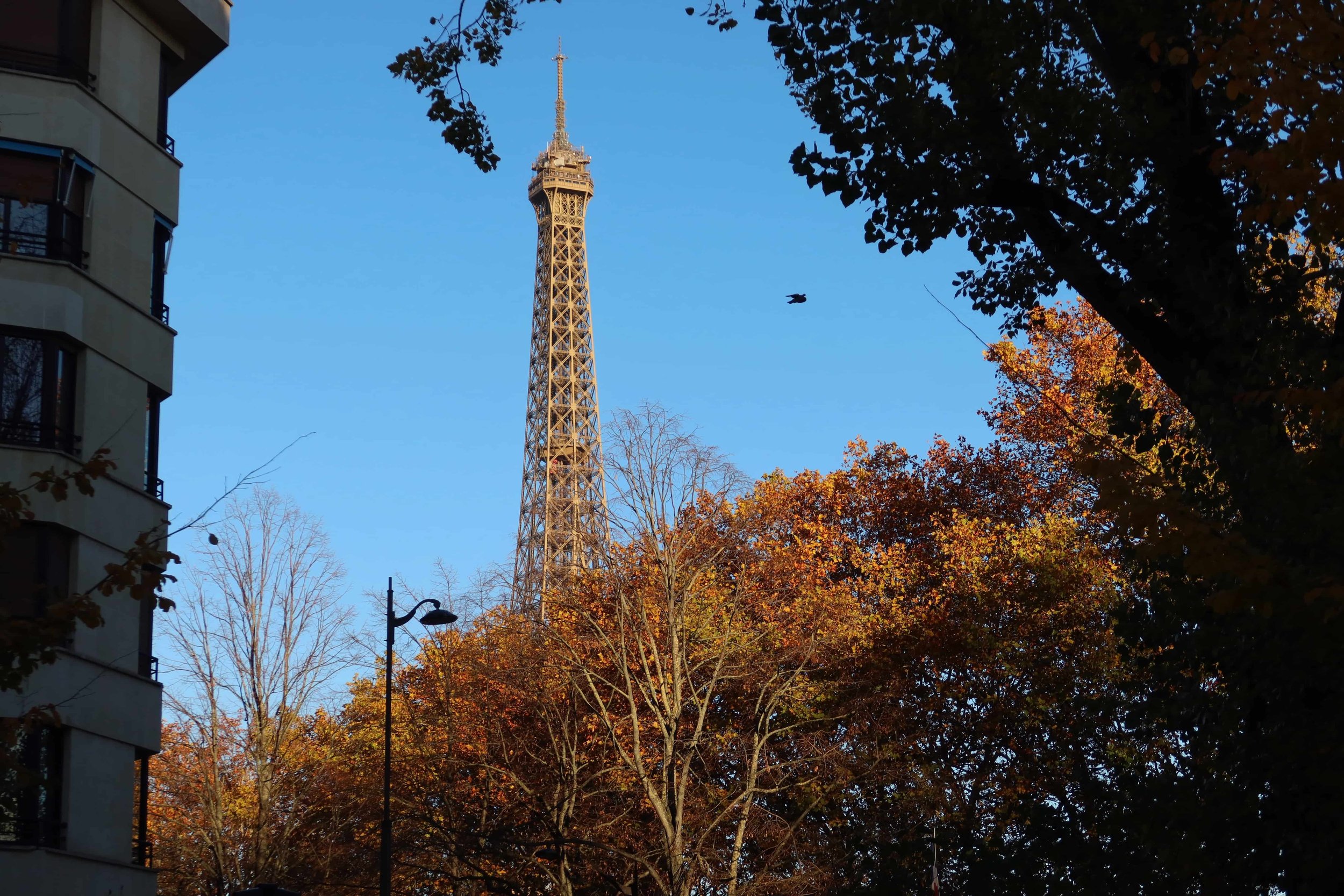
View of Eiffel Tower from Parc de Passy in Paris, France; November 2026
19. Many of the People You’ll Meet in Paris Aren't French
In all of my years living in France, I’ve made two French friends. The rest that I’ve made have always been expats in Paris: such as people from England, Portugal, Tunisia, and more.
What most people don’t realize is that the international community in Paris is strong: people from the U.S., U.K., Australia, North Africa, and more all move to Paris for something else whether it be for school, family, or their career.
Anytime I’ve gone to events or meetups to make friends, while they’ve had French people attending, they were almost always organized by foreigners in Paris.
Same goes for my professional circles Working in marketing, my team members are often from all around the world instead of being French themselves.
Honestly, the international community in Paris is what I expected – as the city is so well-known and desired across the world. However, it does make it more challenging to make French friends – but the plus side is you’ll have no shortage of people around you who also spend their extra hours fighting with the préfecture.
20. Shopping for Everyday Essentials Can Be Surprisingly Difficult
When living in an old and small apartment, you’ll end up doing a lot of shopping in Paris – from groceries to houseware items you would’ve never thought of needing before (such as storage bins to fit under your bed to maximize your living space).
However, what no one told me is that despite being one of the food capitals of the world – is that grocery shopping in Paris is a massive challenge. You can’t find simple things like canned black beans at your local grocery store. Tofu usually has to be bought from organic stores such as Naturalia or Bio c’ Bon. I’ve been scouring the city for Lion’s Maine’s mushrooms on end, hopping into every Asian grocery store, just to leave empty handed every time.
While the pro is that produce in Paris is always fresh and in season, it does make it challenging to find certain items – especially if you have stricter dietary requirements, such as being vegan, like I do.
But isn’t just groceries: shopping in Paris in general is difficult. There’s no equivalent or Target or Macy’s that will have everything I need in one stop. I went on a scavenger hunt trying to find a place to buy a blazer for a job interview until I eventually gave up and ordered one on Amazon.
If you need anything tech related, you’ll have to make a special trip to Fnac. If you need kitchen supplies, you’ll have to go to another store. And so on.
Shopping might be higher quality here in some ways, but it’s definitely not as convenient – and requires more trips to and from your apartment to each individual store.
21. Finding a Job in Paris as a Foreigner Is a Struggle
I’ve been through this more than once now. In fact, I wrote a whole book about it – as I’ve gone through the wringer with French companies trying to sponsor me.
Finding a job in Paris definitely isn’t the easiest, especially as jobs in Paris for foreigners often require a company to sponsor your working permit – but regardless of what people say, it’s actual still more than possible.
However, achieving your dream of working in France as an American will require a lot of grit, hearing a lot of “nos” before getting the right “yes”
There’s a lot of talk in the expat community in Paris that you need to speak French to find a job here, and it’s simply not true. It more so depends on what you do. As a writer who speaks Native English and does content, I’ve found companies interested in my background as I provide a niche for them that a French person never could.
If you’re looking for a job in France, I’ve found the most success with LinkedIn and Welcome to the Jungle – and applying as soon as possible so your application is first in the pile!
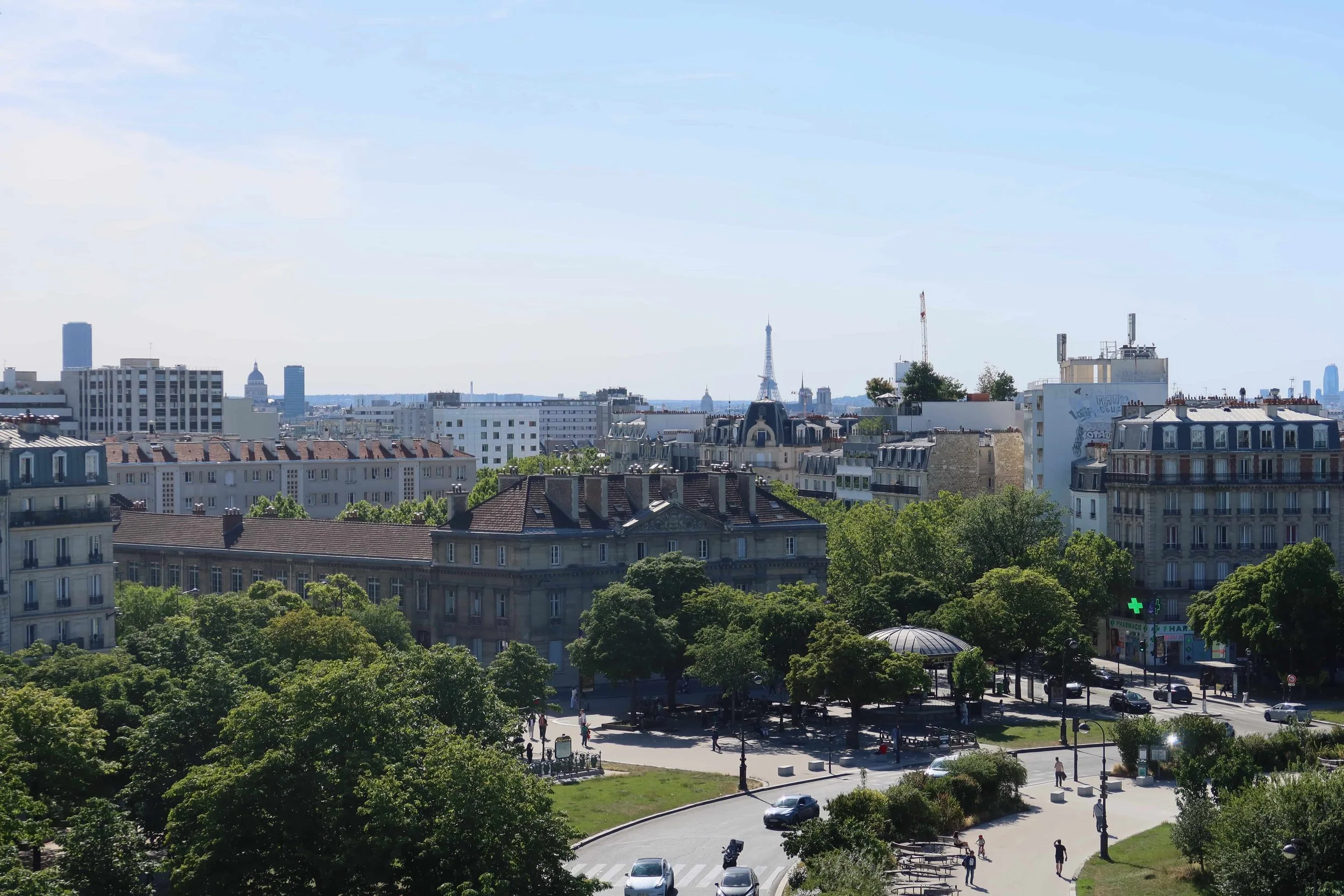
View of Paris from People Nation; August 2026
22. Appointments and Services Often Run Late
In the U.S., I was very used to having my full 30 minutes blocked with a doctor – but in France, appointments for things like a dermatologist, eye doctor, or your médecin traitan (a GP in France) is usually only 10 to 15 minutes.
As a result, appointments in France almost always run late – unless you book your appointment before everyone else first thing in the morning. On average, even if I have an early or mid-day appointment – I am usually waiting around a full hour after my initially scheduled time slot.
This is one of those things about daily life in Paris that you’ll never learn until you’re in it. My advice is: never sweat being late for a medical appointment here, as French punctuality isn’t one of their strong suits (she said thinking about the bureaucracy and paperwork delays all over again).
23. Paper Documents Still Matter More Than You'd Expect
A few weeks ago, a fellow American colleague and I were teasing how we needed file cabinets in our apartments to keep track of all the French paperwork we’ve received since living here.
Except the truth is… it was more of a serious remark than a sarcastic comment.
For instance, in France – when you get a prescription from the doctor, it doesn’t get sent electronically directly to your pharmacy the way it does in the states. You have to bring the piece of paper, or show them the digital prescription sent to your Doctolib account, to the pharmacy to get your prescription.
Same with receipts from stores, a DELF B2 diploma, and any paperwork used for French administration. Paper copies are essential.
In fact, the French system is still astronomically behind on digitalizing things – even if you can now renew your residence permit or apply for citizenship via the ANEF portal. For instance, I got an email saying my DELF diploma was ready – but that I needed to go all the way down to the testing center to pick up the paper copy.
Even when you do things digitally, you’ll still be asked for paper copies later – such as during your French citizenship interview, where you have to bring your original birth certificate.
Let’s just say, I’ve probably killed a tree or two throughout my five years living in France.
24. Appearance and Personal Image Matter a Lot in Paris
I will never forget how when I got hired for my first job in France at the age of 21 (a job that never panned through, but still had professional experiences with them nonetheless) – they commented on my wet hair and how unprofessional it was.
I had shown up to work and school all of the time in D.C. with wet hair, and never had it had any impact on how I was perceived professionally. Personally, I’m in the camp that professionalism has nothing to do with appearance – but Parisian culture and French social expectations are vastly differently than mine.
In fact, one of my friends and I joke that there’s a “dress code” in Paris – as all the girls wear the same types of jacket, have the same haircut, and wear the same boots. I had an ex-friend who religiously subscribed to this “Parisian style”, and she definitely was viewed better amongst the French than I was.
This is vastly different from the U.S., where we comfortably leave our houses in yoga pants or even pajamas to run to the grocery store. Truth be told, I still run into my local grocery store sweaty from my run – because it's convenient. I’ve never had anyone bat an eye, but if they did – I simply don’t care.
But a French colleague of mine was nearly petrified when I told her this, affirming how she would never leave the house to go to the grocery store in pajamas or workout clothes.
If you want, you can do as the Romans do – but this is one of those things I simply march to the beat of my own drum in Paris and don’t feel the need to conform to.
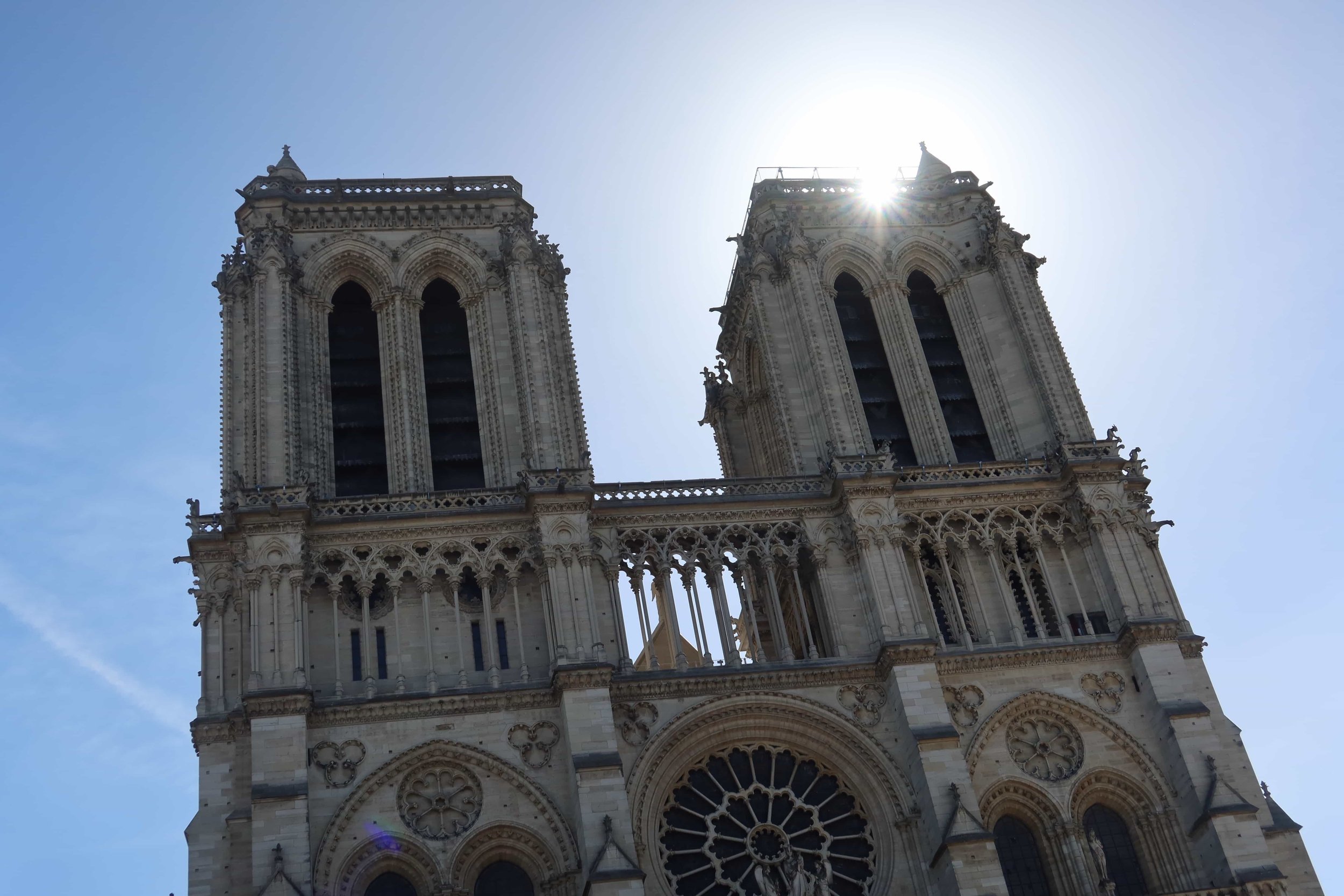
View of Notre-Dame in Paris, France; November 2026
25. The Bread and Bakeries Never Get Old
I thought after a while, I would eventually assimilate to the smell of pastries and butter randomly breezing past my face – but even after all of these years, it’s still one of those sensory experiences that makes any challenges living in Paris all worthwhile.
One of my absolute favorite things about living here is French bread and the Paris bakeries.
There truly is nothing like having those fresh baguettes in the morning for under €1,30. I still love seeing flour get all over my phone or my kitchen table when I tear it apart, especially after buying a baguette after a long trip – as it’s one of those tell-tale signs that I’m finally home.
26. Living in Paris Can Feel Like a Constant Uphill Battle
Expat life isn’t for the weak. Even after all of these years living in Paris, I still come across new difficulties all of the time.
The challenges of living in Paris can feel never-ending, at times. There’s always some word, cultural innuendo, or an inside joke that you don’t quite understand.
And even after years of living here, the bureaucracy and simple tasks turned gruesome due to language barriers and their lack of punctuality can still feel infuriating if you’re used to a world with more efficiency.
Living abroad in Paris as an American has really challenged me personally to be better at “adulting”. As I only lived alone, started working full-time, and handling a household on my own for the first time after moving to France – I feel like there’s nothing I can’t do.
If I can successfully acquire my missing Amazon packages, get a refund for a freezer, and secure an appointment to pick up my 10 year residence card in a somewhat timely manner – everything else can suddenly seem like a piece of cake.
27. Paris Never Stops Being Movie-Like Beautiful
Even when French bureaucracy has me on my knees or I’m gutted thinking about all the trees I’ve used to print paper for a medical appointment – the beauty of Paris truly never gets old.
This goes for everyone I’ve spoken to who is also an expat living in Paris – many of whom have lived here for twice as long as I have.
We all agree that Paris is the most beautiful city in the world. Even after my own adventures spanning Japan, South Africa, Israel, and all over Europe – the more that I travel, the more I come to terms with that no city will ever be as pretty as Paris.
Between the architecture, historic streets, and other unexpectedly charming corners you come across on your day-to-day life – the city somehow never ceases to take my by surprise.
I’m still taken aback when I see the Eiffel Tower sparkle in the distance or the Sacré-Cœur from afar, and by this point – I think I always will be.
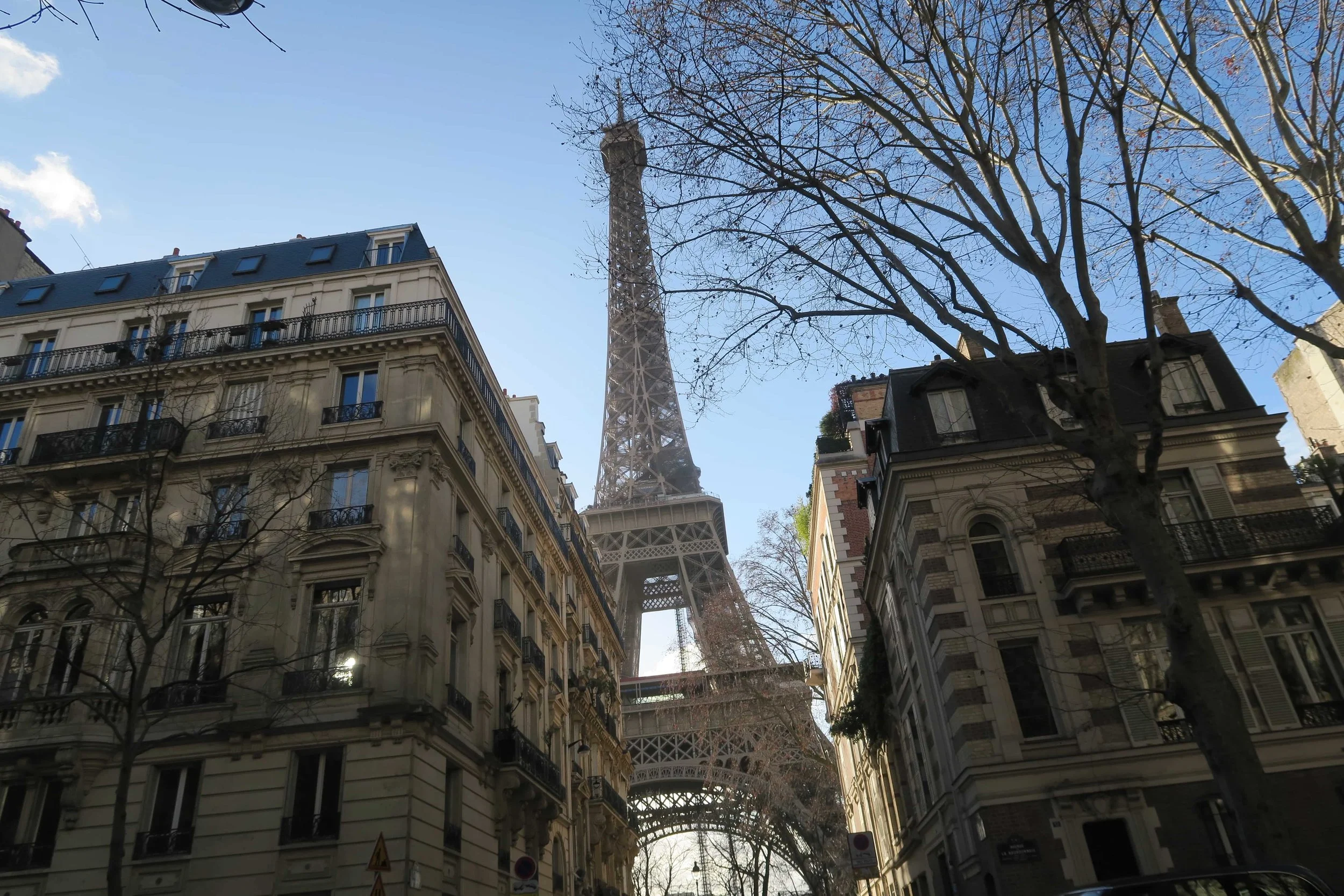
View of Eiffel Tower in Paris, France; January 2022
🗼 ✨ Frequently Asked Questions About Moving to Paris
Yes, Paris is a good place to live – as you’ll have lots of vacation days, medical care largely covered, and the opportunity to live in a country with a rich and distinct culture.
The biggest challenges of living in Paris are the stark cultural differences and the language barriers. Learning French and finding the right friends can make a world of difference, but both can prove challenging in the French capital.
Moving to Paris as an American can prove difficult due to the language barrier, cultural differences, and the need to be sponsored for a work permit. However, difficult doesn’t mean impossible. If it’s your dream, there are many ways to make moving to Paris as an American a reality!
No, you really cannot live in Paris without speaking at least some French. Even if you have colleagues, doctors, or friends who speak English – having a basic understanding of the language will help you better navigate the language barrier.
Yes, it is extremely difficult to make friends in Paris. Many women here are fulfilled by family or partners and don’t put the same amount of emotional effort into their friendships – making a lot of friendships in the city surface-level and more suited for light-hearted social activities.
Yes, living in Paris is vastly different from visiting Paris. As a tourist, you won’t come to fully understand the challenges of living here between the bureaucracy, paperwork, late appointments, crowded metros, and more. As a tourist, Paris is definitely a lot “rosier” than what locals see it for: a big, dirty, busy French city.
Paris being expensive will really depend on who you’re asking. If you’re from a major city in the U.S. like New York, Washington D.C., or San Francisco, you’ll find groceries and rent in Paris far less expensive. However, if you’re from middle America or a Southern European country like Greece, Spain, Portugal, or even Italy – you’ll probably find Paris’s price tag steep.
Yes, moving to Paris is absolutely worth it – as the lifestyle is very conducive to artistic types who appreciate a slower way of living while still being in a big metropolitan area.
Final Thoughts: What I Wish I Knew Before Moving to Paris
When I moved to Paris in September 2021, I was far more wide-eyed and expected the city to fill some sort of hole inside me – one that would be accepting of my differences. While that’s been challenging, I’m really happy that I can tell my 23-year-old self that she got exactly what she came here for: fresh bread every day, people watching while writing in cafés, and a completely different atmosphere to the more career-and-composed one I was used to back in Maryland.
Over the past five years, I’ve learned far more about people, how to navigate cultural differences, and how to still enjoy a city you love even when some of your values don’t fully align with a place’s individual preferences.
My relationship with Paris has inevitably changed since I saw it with a fresh pair of eyes at 18. I’m more skeptical of the cynicism and resigned demeanor that roams the city, reluctantly chasing my packages down like a hawk, and mentally prepare myself to print a tree’s worth of paper for administrative appointment.
And yet, whenever I wander the city on the weekends and see those same iron gate fences I met nearly a decade ago – I still marvel in the beauty. Whether it’s the Sacré-Cœur peaking behind the sun or the Eiffel Tower sparkling in the distance on a rooftop – I’m somehow still under this city’s magical spell.
After all, Paris is known as the city of lights – and I’ve found that no matter how much energy it takes to keep those lights on… you wouldn’t trade it for a second without it.
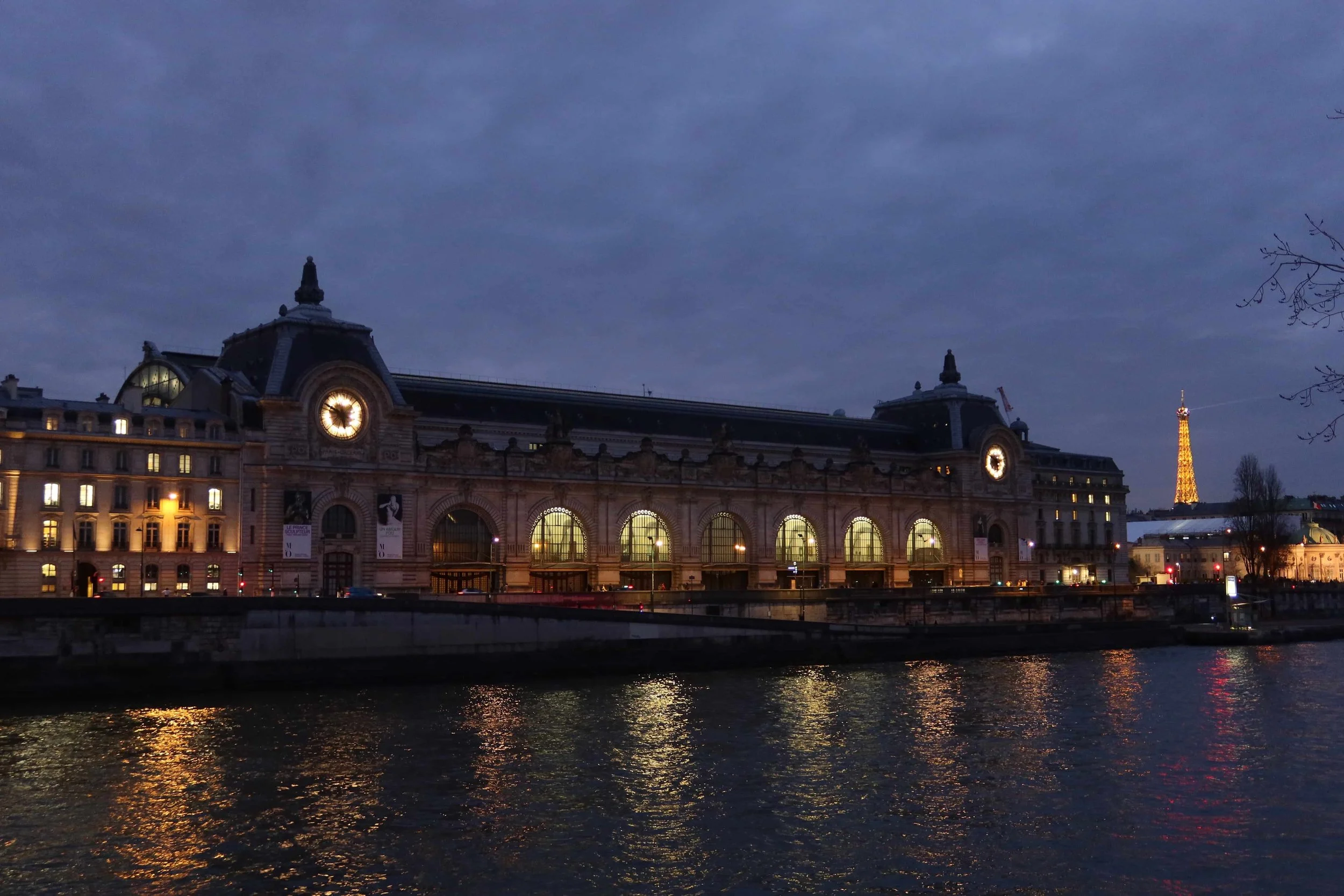
View of Musée d’Orsay at night in Paris, France; January 2026
Looking for more information and Paris and France as you plan your trip?
Click here to discover more, as I have several articles like this to help you plan the perfect trip to Paris and the rest of France.
Additional articles you may find helpful include:
10 Best Day Trips from Paris by Train (From a Local's Perspective)
Your Ultimate Guide to Disneyland Paris: Is It Worth A Day Trip?
10 Best Neighborhoods in Paris: Where to Stay (A Local’s Guide)
Your Guide to a First Trip to Paris: A Local-Approved 5-Day Itinerary
Never want to miss out on my local Parisian tips? Be sure to sign up for my newsletter to always hear the latest on what’s going on in Paris.

Last updated: November 28, 2026